Editorial desk / guides
An evergreen library of strategy explainers
The strategy desk writes explainers that age slowly. The map ledger, the draft board, the patch workshop, the viewing rail and the responsible play primer are the five backbones of the library. Each guide carries a sourcing note and a date.
01 / guides
The guide library is an evergreen explainer collection. Each guide is a slow-reading aid: the map ledger, the draft board, the patch workshop, the viewing rail and the responsible play primer are the five backbones of the library.
Map ledger
Lane rotation, site callouts
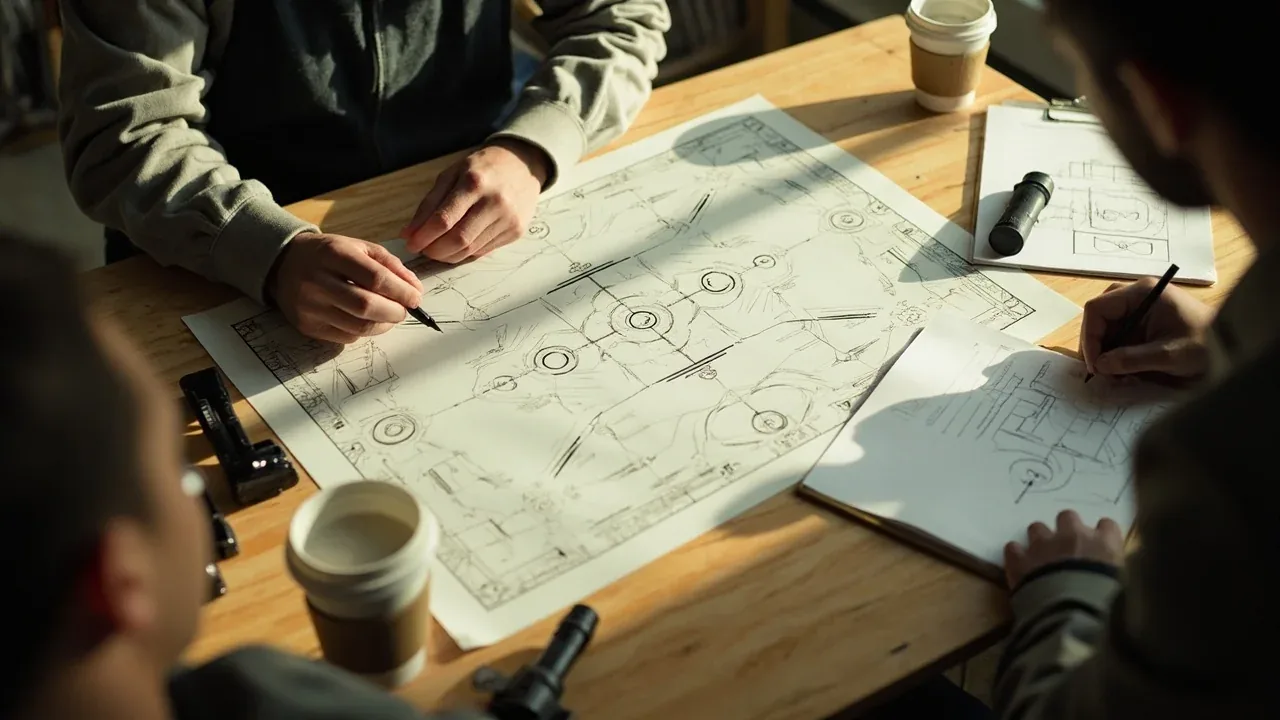
Reference plates for the round-based archetype. Each plate is a paper-and-pencil reference, not a live overlay.
Draft board
Role and role-icon magnets
Generic role-icon magnets: shield, spear, bow, mask, gear, crown. The board supports the draft reading.
Patch workshop
Change + interpretation pairs
Patch notes are facts. Interpretation is editorial. The workshop pairs each change with the reading.
Viewing rail
Streams, replays, captions
Official broadcast, regional mirror, caption feed, replay window. The rail is a directory of official sources.
Responsible play
Responsible wagering context
Editorial context for the disclosed first-party route. Not a promotion; an editorial note.
Reading checklist
Three passes through any guide
A reading checklist: the lead, the editorial ask, the source register. Three passes is the desk's reading rule.
02 / how a guide is sourced
Each guide carries a sourcing note and a date. The desk reads the operator channel first, the licensed broadcast partner second, and the team channel third. The tier-one source is the only source for a confirmed claim.
03 / beginner roadmap
A beginner roadmap is three steps. The first step is the calendar: open the tournament horizon and pick a track. The second step is the read: open the match preview board and read the split. The third step is the broadcast: open the viewing rail and follow the official source.
Step one · calendar
The reader opens the tournament horizon and picks a track. The desk recommends starting with the tactical FPS horizon because the format reads cleanly.
Step two · read
The reader opens the match preview board and reads the split. The two columns are the source facts and the editorial reading. The desk recommends reading the source facts first and the editorial reading second.
Step three · broadcast
The reader opens the viewing rail and follows the official source. The desk recommends the licensed broadcast partner as the primary watch.
04 / intermediate roadmap
An intermediate roadmap is five steps. The reader adds the map ledger and the patch workshop to the calendar, the read and the broadcast. The five steps are:
- Open the tournament horizon and pick a track.
- Open the team corridor and read the organisation.
- Open the player role gallery and read the function.
- Open the match preview board and read the split.
- Open the patch workshop and read the change next to the editorial reading.
05 / reading checklist
A reading checklist is three passes through any guide. The first pass is the lead; the second pass is the editorial ask; the third pass is the source register. Three passes is the desk's reading rule.
First pass · lead
The reader reads the lead paragraph. The lead is the editorial ask; it is the desk's reading of the topic.
Second pass · editorial ask
The reader reads the editorial ask. The ask is the working hypothesis; it is the desk's reading of the layer.
Third pass · source register
The reader reads the source register. The register is the desk's evidence base; it is the rule.
06 / responsible play
The play12 desk publishes an editorial responsible-play note. The note is not a promotion. The note is an editorial ask: the reader is invited to read the source register on every claim, including the editorial claims.
What the desk does
The desk publishes a disclosed first-party route inside editorial sections that earn it. The disclosure is on the route card. The route is not embedded in third-party iframes and is not placed in any primary navigation slot.
What the desk does not do
The desk does not run paid placements, third-party affiliate redirects, or unauthorised claim language. The desk does not run live tickers, prediction markets, or live odds feeds.
07 / evidence
The guide library is sourced from the operator channel first, the licensed broadcast partner second, and the team channel third. The tier-one source is the only source for a confirmed claim.
08 / related
The guide library is one of three interconnected desks. The map ledger reads the same round and adds the spatial story. The patch workshop reads the same patch and adds the reading.
09 / desk notes
The desk writes a guide in three passes. The first pass is the operator channel; the second pass is the licensed broadcast partner; the third pass is the team channel. The three passes are the editorial cadence.
First pass
The first pass reads the operator channel. The operator channel publishes the source date, the rule book version, the patch version. The reader is invited to read the operator channel first, before the broadcast partner.
Second pass
The second pass reads the licensed broadcast partner. The broadcast partner publishes the schedule, the regional mirror, the caption feed. The reader is invited to read the broadcast partner second, while the operator channel is still fresh.
Third pass
The third pass reads the team channel. The team channel publishes the roster, the tier note, the brief statement. The reader is invited to read the team channel third, after the broadcast partner.
10 / guide mechanics
The guide is rebuilt for every topic. Each page carries the title, the lede, the body, the source register. The mechanics are simple and public: the reader is invited to verify the source and judge the editorial ask.
Source register
Each guide carries a source register. The register lists the operator channel, the broadcast partner, the team channel. The reader is invited to verify the register before judging the editorial ask.
Editorial ask
Each guide carries an editorial ask. The ask is the working hypothesis; it is the desk's reading of the topic. The reader is invited to read the ask second, while the source facts are still fresh.
Reading checklist
Each guide carries a reading checklist. The checklist is the three-pass rule: the lead, the editorial ask, the source register. The reader is invited to read the checklist third, after the editorial reading.
Update cadence
Each guide is updated as soon as a tier-one or tier-two source changes. The desk publishes a weekly update note on Tuesdays.
11 / seasonal reading
The strategy desk reads the calendar seasonally. The first read is the regional qualifier window in late September; the second read is the patch-shift window in early October; the third read is the year-end register in mid-December. Each read is a working note, not a forecast.
Regional qualifier
The regional qualifier window opens in late September. The desk reads the operator channel first, the licensed broadcast partner second, and the team channel third. The window is a one-month read; the desk accepts corrections and additions through the contact page.
Patch shift
The patch-shift window opens in early October. The developer patch portal announces the changes; the editorial reading sits on top of the workshop. The window is a one-month read; the desk invites the reader to read the change before the reading.
Year-end register
The year-end register opens in mid-December. The past-edition register is closed, the source register is audited, the editorial standards are published. The register is a one-month read; the desk accepts tips and corrections through the contact page.
12 / reading rules
The strategy desk runs on three reading rules. Rule one: the lead is the editorial ask. Rule two: the editorial reading is the working hypothesis. Rule three: the source register is the rule.
Rule one
The lead is the editorial ask. The reader is invited to read the lead first, before the source facts. The lead is the editorial ask; the source facts are the rule.
Rule two
The editorial reading is the working hypothesis. The reader is invited to read the editorial reading second, while the source facts are still fresh. The editorial reading is the ask; the source facts are the rule.
Rule three
The source register is the rule. The reader is invited to read the source register third, after the editorial reading. The source register is the rule; the editorial reading is the ask.
Working hypothesis
A working hypothesis is a question that the season will answer. The reader is invited to read the hypothesis, then read the next edition of the season register. The hypothesis is the ask; the answer is the rule.
FAQ
Reader questions, answered plainly
How long is a guide?
A guide is between 1,500 and 4,000 words. The desk recommends reading the lead paragraph first, the editorial ask second, and the source register third.
How often is a guide updated?
Guides are updated as soon as a tier-one or tier-two source changes. The desk publishes a weekly update note on Tuesdays.
What does the desk not cover?
The desk does not cover solo-story arcade games, single-player speed-run communities, or community tournaments without a licensed broadcast partner.
Where is the source register?
The source register is on the standards footer column and on the evidence register page.
What does responsible play mean?
Responsible play is the editorial ask. The desk reads the source register on every claim, including the editorial claims.